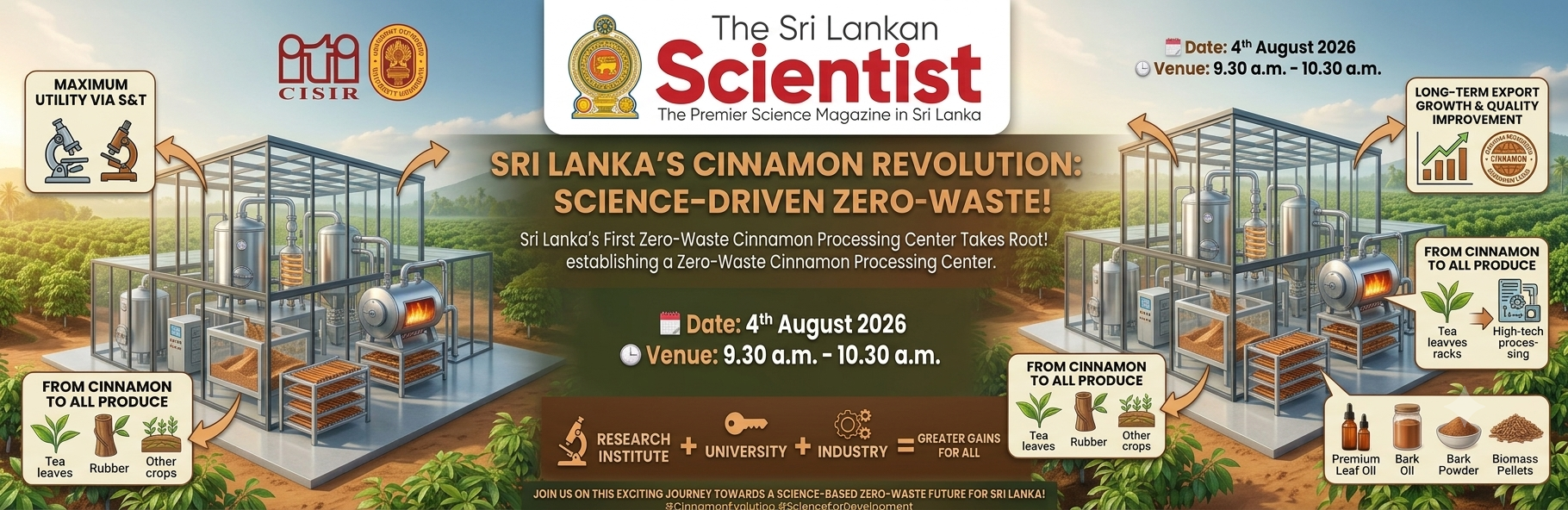
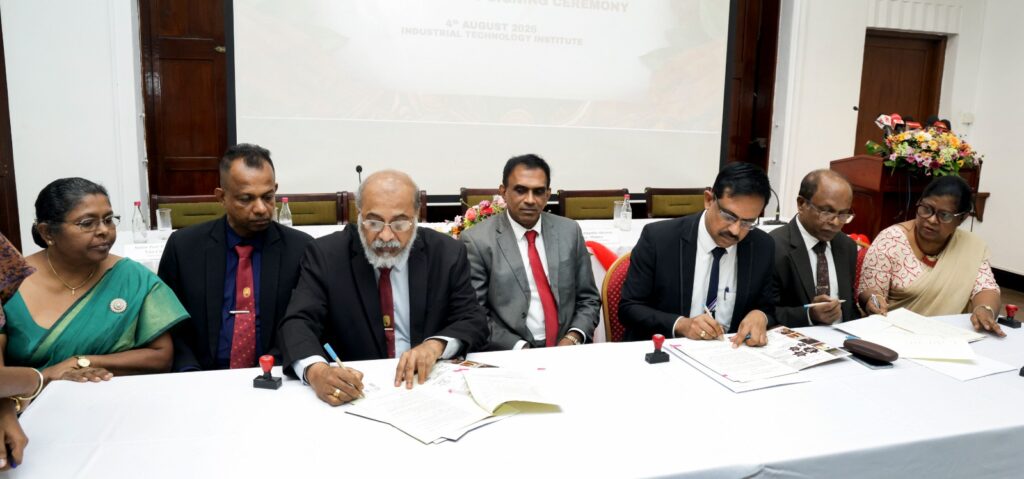
Marking a landmark advancement for Sri Lanka’s agricultural technology and export sector, a Memorandum of Understanding (MoU) was signed today to establish the country’s first-ever Zero-Waste Cinnamon Processing Center.
This transformative initiative is a strategic collaboration between the Ministry of Science and Technology, the Industrial Technology Institute (ITI), and the University of Ruhuna. By uniting state research institutes, academia, and industry leaders, the project aims to unlock the maximum scientific and economic utility of Ceylon Cinnamon.
Science-Driven Circular Economy: How Zero-Waste Cinnamon Processing Works
The newly established facility utilizes advanced science and technology to eliminate agricultural waste, transforming every component of the cinnamon crop into high-value commercial derivatives:
- High-Grade Oil Extraction: Fresh leaves, twigs, and bark undergo specialized steam distillation to produce premium leaf oil and bark oil.
- Export-Quality Cinnamon Products: Processed stems yield top-tier C5 and other premium-grade cinnamon quills, alongside standardized cinnamon powder for global markets.
- Closed-Loop Energy Recovery: Organic byproducts—such as spent stems, bark scrapes, and leaf residue—are processed in a pelletizer to create biomass pellets or converted to charcoal in high-efficiency kilns. This biomass feeds a heat recovery loop and pressurized boiler, powering the center’s climate-controlled drying environment.
A Scalable Blueprint for All Sri Lankan Produce
While spearheaded in the spice sector, this sustainable, technology-driven framework is designed to extend far beyond cinnamon. The zero-waste processing model serves as a scalable benchmark for Sri Lanka’s broader agricultural industries, including tea, rubber, coconut, and traditional fruit crops.
By integrating applied research from universities and institutes into commercial supply chains, Sri Lanka is setting a new standard for sustainable agriculture, quality control, and long-term export growth.