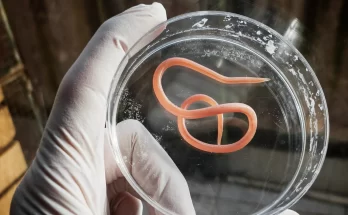
Rare 3-Inch Snake Parasite Found in Woman’s Brain
Astonishing medical discovery: 64-year-old woman in Australia found with 3-inch snake parasite in her brain, captivating the world.
Rare 3-Inch Snake Parasite Found in Woman’s Brain Read More
The Premier Science Magazine in Sri Lanka
Latest from Sri Lankan Medical Research
Astonishing medical discovery: 64-year-old woman in Australia found with 3-inch snake parasite in her brain, captivating the world.
Rare 3-Inch Snake Parasite Found in Woman’s Brain Read More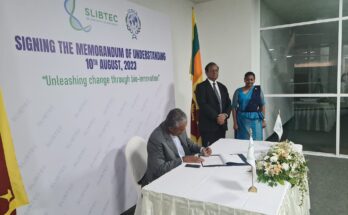
In a significant stride towards fostering collaborative advancements in the realm of biotechnology, the International Center for Genetic Engineering and Biotechnology (ICGEB) and the Sri Lanka Institute of Biotechnology (SLIBTEC) formalized their partnership through a Memorandum of Understanding (MOU) on August 10, 2023.
Sri Lanka Institute of Biotechnology (SLIBTEC) Joins Forces with International Center for Genetic Engineering and Biotechnology (ICGEB) through New MOU Read More
Chronic Kidney Disease of Unknown Etiology/Uncertain Cause (CKDU) is a type of chronic kidney disease that primarily affects impoverished agricultural communities in dry zone of Sri Lanka where a substantial number of people develop an inexplicable, fatal form of kidney disease.
Study Shows Higher Rates of Renal Injuries among Children in CKDu Endemic Areas Read More
In a special announcement futrescienceprize.org website announced the 2021 winners of the Future Science Prize that included the name of world-renowned virology expert Prof. Malik Pieris as the recipient of the Life Science Prize for the year 2021.
Prof. Malik Pieris Honored with Prestigious 2021 Future Science Prize Read More
Releasing a special report on 11th August 2021 Independent Expert Group appointed by the World Health Organization urged the Sri Lankan authorities to impose immediate travel restrictions to control the current outbreak and save at least 18000 lives from this deadly pandemic.
Impose Immediate Mobility Restrictions and Save 18000 Sri Lankan Lives: WHO Expert Group Urges Read More
In a special ceremony held in Colombo on 30th July 2021, National Science Foundation of Sri Lanka launched a book titled “COVID-19, Impact Mitigation, Opportunities and Building Resilience”. The book discusses different perspectives of global relevance based on research, experiences and successes in combating COVID-19 here in Sri Lanka, and contain opinions of experts from different fields that are directly related to the ongoing pandemic. In this event, Prof. Malik Peiris, the world-renowned virologist from University of Hong Kong delivered a special presentation titled “Reflections on a post-pandemic future”.
Sri Lanka to Face the Worst of COVID-19 in Coming Weeks – Prof. Malik Peiris Read More
Among the many problems caused by the COVID-19 pandemic, the effect of this deadly pandemic on pregnant women is one of the major concerns in many of the affected countries. During the second and third waves of this pandemic in Sri Lanka we saw several pregnant mothers die because of COVID 19 related complications.
Pregnancy & COVID-19 Read More
In a recent research carried out by group of researchers from University of Colombo and Robert Koch Institute in Germany it was revealed that two cave-dwelling Sri Lankan bat species …
Alpha and Beta Corona-virus Subgroups(NOT Covid Virus Variants) found in another two bat species in Sri Lanka Read More
With some hiccups here and there the COVID vaccination in Sri Lanka is slowly getting in to a well organized program even with the limited stocks of vaccines the country is receiving from different sources and manufactures. Recently Sri Lankan health authorities published a priority list categorizing different groups of the society in to an order to receive the vaccine. According to this list Healthcare workers, Elderly citizens who are over 60 yrs old, and pregnant women get the priority in vaccination programs.
No COVID Vaccines for Children Yet, but WHY? WHO Expert Explains Read More
Researchers running the University of Oxford-led Com-COV study – launched earlier this year to investigate alternating doses of the Oxford-AstraZeneca and the Pfizer vaccine – have last week reported preliminary data revealing more frequent mild to moderate reactions in mixed schedules compared to standard schedules.
Mixing and Matching Vaccines May Cause Troubles: Oxford Research Read More