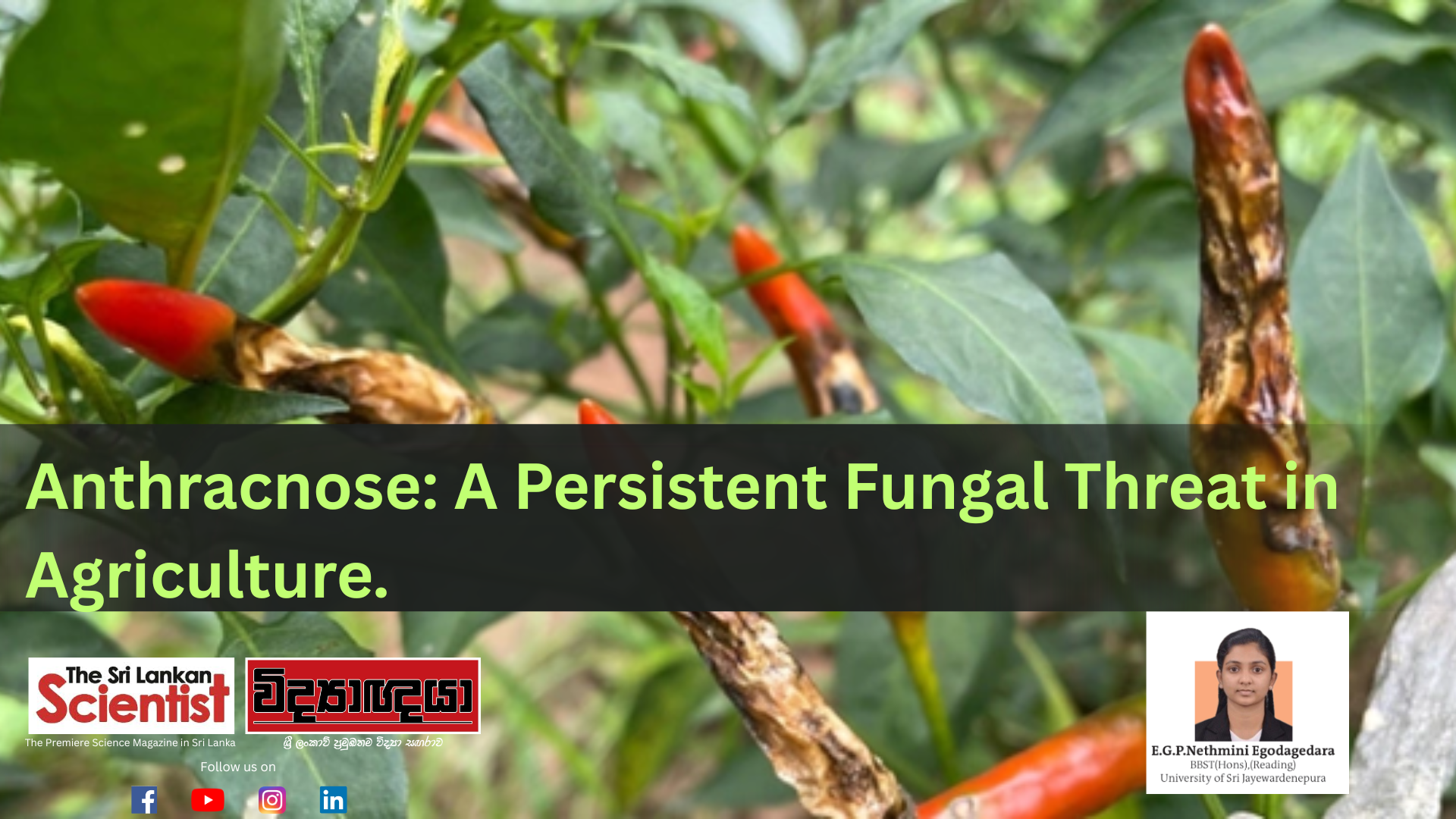
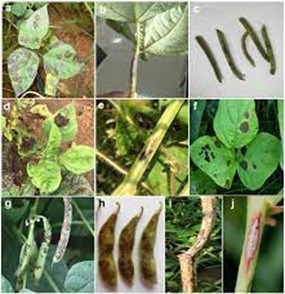
Anthracnose is a destructive and widely spread fungal disease affecting a broad range of crops worldwide. It severely impacts both the pre- and post-harvest stages in tropical and subtropical regions. Coletotrichum species act as a causative agent characterized by different symptoms on fruits, leaves, stems, and flowers. It mainly affects many crops, including many fruits (Avocado, mango, Banana, Passion fruit, Citrus, melons), Vegetables, and legumes.
Mainly, Colletotrichum gloeosporioides is caused by Mango, avocado, Passion fruit, and cashew. C.acutatum is involved mainly in Mango infections. C.orbiculare attack on Melons and C.musae effect on banana varieties. Sunken dark lesions on fruits, leaf spots, internal rotting in fruits, Blossom blight, and pepper spots on Avocados are symptoms of this disease development. The main challenge is that the disease remains dormant in green fruits for months and only becomes active during wet and humid conditions or ripening and storage, causing post-harvest damage. Anthracnose exhibits various pathways of spread, primarily through seed-borne transmission, splashing water from rain or irrigation, wind dispersal of spores, crop residue on the field, and contaminated tools, as well as contact with workers. It thrives in warm, humid environments, particularly in rainy seasons.
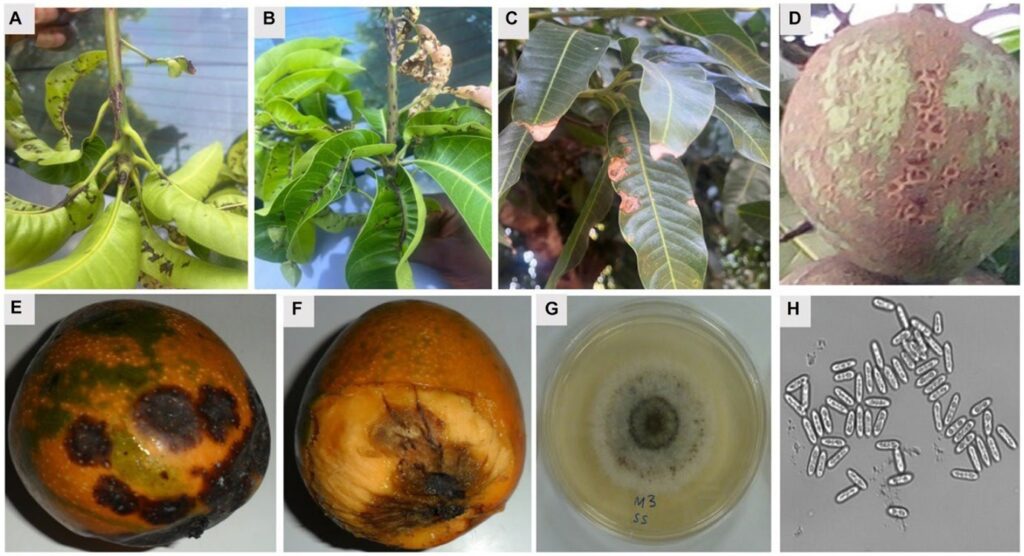
Source: https://www.frontiersin.org/files/Articles/1168203/fmicb-14-1168203-HTML-r2/image_m/fmicb-14-1168203-g002.jpg
For the control and management of this disease, the following practices can be followed regularly.
Pre-Harvest Management
- Apply fungicide spray programs during flowering and fruiting stage.
- Prune trees to remove dead parts.
- Maintain hygiene by removing infected fruits and plant debris.
- Ensure balanced nutrition, especially calcium and nitrogen.
- Use resistant varieties of available crops and fruits.
- Avoid planting into infected soil or using contaminated seeds.
Post-Harvest Management
- Treat harvested fruits with fungicides or hot water dips.
- Pre-cool fruit if transport takes more than two days.
- Store at recommended temperatures to slow disease development.
- Handle fruit gently to avoid wounds that aid infection.
Anthracnose is more than just a common fungal disease. It’s a persistent agricultural threat that requires integrated disease management. With careful attention to hygiene, crop rotation, the use of resistant varieties, and timely treatments, farmers can significantly reduce their impact on yield and post-harvest quality. Leveraging modern tools and staying informed about disease behavior are key steps toward sustainable crop protection and food security. Now the world moves forward with genetic resistance for these diseases rather than practicing other management strategies. In Sri Lanka, researchers are going on generating resistance breeding lines of some crops to improve genetically resistant crop varieties.